A small living room doesn’t have to feel cramped or limiting. With the right decorating choices, even a compact space can feel open, comfortable, and beautifully put together.
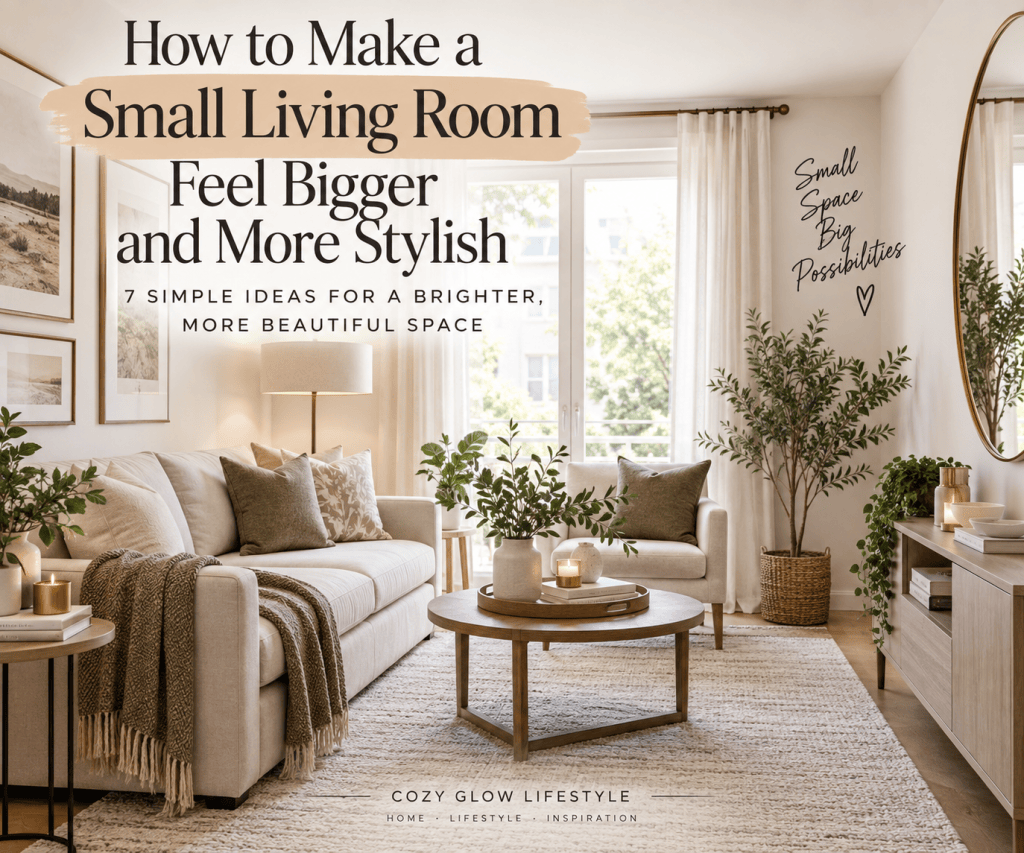
The secret isn’t necessarily having less — it’s being more intentional about color, scale, lighting, furniture placement, and the way you use the space you already have.
Whether you’re decorating a small apartment, working with an awkward layout, or simply trying to make your living room feel more spacious, these simple ideas can make a surprisingly big difference.
Here are 7 easy ways to make a small living room feel bigger while still keeping it cozy and stylish.
1. Choose a Light, Cohesive Color Palette
One of the easiest ways to make a small living room feel more spacious is to create a sense of visual continuity.
Light neutrals, soft warm tones, muted pastels, and natural shades can help reflect light and make the room feel brighter and more open.
But that doesn’t mean everything has to be white.
Try choosing a simple palette of two or three complementary colors and repeating them throughout the room in your walls, textiles, furniture, and accessories.
When too many contrasting colors compete for attention, a small room can start to feel visually busy. A cohesive palette creates a calmer, more polished look — and helps the eye move naturally through the space.
Cozy tip: Add warmth through texture instead of adding lots of different colors. Think woven baskets, linen curtains, soft throws, wood accents, and textured pillows.
2. Use Mirrors Strategically
Mirrors are one of the oldest small-space decorating tricks — and for good reason.
A well-placed mirror can reflect both natural and artificial light, helping a small living room feel brighter and more expansive.
Try positioning a large mirror across from or near a window so it can reflect some of the natural light coming into the room.
You can also use a statement mirror above a console, fireplace, or sofa to create a stronger focal point.
And when possible, go bigger rather than using several tiny mirrors. One substantial mirror often creates a cleaner, more intentional look while giving the illusion of greater depth.
3. Choose Furniture With a Lighter Visual Weight
When space is limited, the visual weight of your furniture matters almost as much as its actual size.
Bulky pieces that sit directly on the floor can make a small room feel heavier and more crowded.
Instead, look for furniture with clean lines, slimmer profiles, and visible legs.
A sofa raised slightly off the floor, an accent chair with narrow legs, or a coffee table with an open base allows more of the floor to remain visible. That extra visual space can make the entire room feel lighter.
Scale matters too.
Oversized furniture isn’t automatically wrong for a small room, but every piece should earn its place. A comfortable sofa paired with a couple of lighter pieces will often work better than trying to squeeze several small pieces of furniture into the same space.
4. Hang Your Curtains Higher and Wider
Curtains can completely change the way we perceive the proportions of a room.
Instead of placing your curtain rod directly above the window frame, hang it closer to the ceiling and extend it beyond the sides of the window.
This simple trick draws the eye upward and can make both the windows and ceiling appear taller.
Allowing the curtains to sit outside the window when they’re open also exposes more glass, which means more natural light can enter the room.
For an airy look, choose curtains that reach the floor and fabrics that don’t feel overly heavy.
It’s a small decorating adjustment that can make the architecture of the room feel noticeably more generous.
5. Make Use of Vertical Space
When you don’t have much floor space, look up.
Vertical decorating draws the eye upward and helps emphasize the full height of the room rather than its limited square footage.
Tall bookcases, floating shelves, vertical artwork, and floor lamps are all great ways to use this often-overlooked space.
You can also hang artwork slightly higher or create a gallery arrangement that moves upward rather than spreading too widely across the wall.
The goal isn’t to fill every inch. It’s to create intentional vertical lines that make the room feel taller and more dynamic.
Just remember to leave some negative space. Empty areas give the eye somewhere to rest and keep a small room from feeling cluttered.
6. Choose the Right Rug Size
One of the most common decorating mistakes in a small living room is choosing a rug that’s too small.
It might seem logical that a small room needs a small rug, but an undersized rug can actually make the space feel even smaller by visually dividing the floor into separate sections.
Instead, choose a rug large enough to connect your main furniture pieces.
Ideally, at least the front legs of your sofa and chairs should sit on the rug. This creates one cohesive conversation area and makes the overall layout feel more intentional.
A properly sized rug anchors the room and can make the entire space appear larger and more polished.
7. Keep the Layout Open — but Still Cozy
A small living room needs breathing room.
That doesn’t mean pushing every piece of furniture against the walls or removing everything decorative. Instead, think about how easily you can move through the room and where your eye naturally travels.
Keep major walkways clear and avoid placing unnecessary furniture where it interrupts the flow of the space.
Then add personality selectively.
A beautiful throw, a few carefully chosen pillows, a plant, a stack of books, or a styled coffee table can make the room feel warm and lived-in without overwhelming it.
The key is giving your favorite pieces enough space to stand out.
Instead of filling every available surface, leave a little room around your decor. Often, fewer well-chosen pieces look more sophisticated than a large collection of small accessories.
Final Thoughts
Making a small living room feel bigger isn’t about trying to disguise its size. It’s about making the most of the space you have.
A cohesive color palette, better furniture proportions, strategic mirrors, properly hung curtains, vertical decorating, the right rug, and an intentional layout can completely change how a compact room feels.
Most importantly, you don’t have to sacrifice personality or coziness to create a more spacious look.
Your living room can be small, stylish, comfortable, and completely yours — all at the same time.
Love cozy, stylish spaces and easy decorating ideas? Follow Cozy Glow Lifestyle on Instagram for more home inspiration, simple styling tips, and ideas to make your space feel more like you. @cozyglowlifestyle✨
 cozyglowlifestyle